
It’s a little past 9 p.m. on a Thursday evening.
The house is quiet. My running shoes are already by the door for tomorrow morning. My Garmin watch sits on the table, charging beside a glass of water.
In about twenty minutes, I’ll turn off the light and go to sleep.
Not because I’m exhausted. Not because I have nothing else to do.
But because over the past few months, I’ve been training myself to go to bed early. Earlier than I used to. Earlier than feels natural sometimes.
When you wake up before sunrise to train, sleep becomes part of the training.
Tonight is supposed to be a swimming night. Every Thursday usually is. But today, I skipped it.
And strangely, that might have been the most disciplined decision of the day.
The Athlete’s Guilt Around Rest
If you’ve spent any time in endurance training, you probably know this feeling.
You look at the schedule. The workout is there.
And if you don’t do it, something inside whispers:
You’re being lazy.
Missing a session can feel heavier than finishing a hard one.
For a long time, I carried that mindset with me.
If the training plan said run, I ran. If it said swim, I swam. Even when my body felt tight or tired.
I believed discipline meant never skipping.
But endurance sports slowly teach you something deeper about training discipline.
Discipline is not only about pushing harder.
Sometimes it is about knowing when not to.
This shift took years for me to understand.
The Two-Hour Physiotherapy Session
Yesterday my body made the message very clear.
For the past few weeks, training has been intense. Long sessions, brick workouts, strength work, and the usual routine of stretching and rehabilitation.
Still, the body carries the load.
Yesterday afternoon, my left leg felt incredibly tight, and my left shoulder was stiff in a way that stretching couldn’t fix.
So I went to see my physiotherapist, Dung.
What I thought might be a short treatment turned into more than two hours of sports recovery work.
The session started with deep manual therapy.
The therapist pressed into different layers of muscle from angles I didn’t know existed. Some areas were tender, others surprisingly numb.
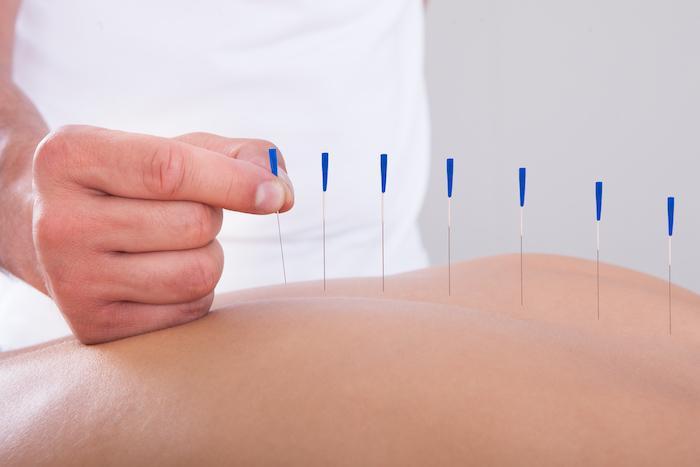
Then came acupuncture.
Thin needles placed precisely into tight points in the muscles.
After that, electrical stimulation.
A gentle current flowed through the needles, reaching deeper muscle fibers that hands alone cannot release.
At first it felt strange.
Then gradually, deeply relaxing.
By the end of the session, my whole body felt lighter.
Not fully recovered. But released.
When I got home, I felt something athletes rarely allow themselves to feel.
Sleepy.
So I listened.
I went to bed early.
That moment reminded me that athlete recovery is not passive. It’s active care.
When Data Confirms What Your Body Already Knows
This morning, my body still felt a little tired from the physiotherapy work.
So before deciding what to do, I checked my Garmin.
Over the past few weeks, it has been giving me the same signal again and again.
Poor recovery.
It wasn’t dramatic. Just a consistent reminder that the body needed time before it could benefit from more load.
Garmin recovery metrics can sometimes feel like a small voice of reason.
Not the final decision maker, but a useful mirror.
And this is where triathlon training balance becomes important.
Instead of the planned brick workout of cycling and running, I spoke with my coach.
We agreed on something different.
Strength training at the gym.
A controlled session. Air conditioning instead of heat. Weights instead of kilometers.
No swim tonight.
It will move to tomorrow.
A small adjustment.
But those adjustments are often where real sports recovery happens.
Learning to Adapt the Training Plan
In the gym this morning, something interesting happened.
I enjoyed it.
Not the suffering type of enjoyment athletes sometimes chase. But a calm kind.
Lifting weights in a cool room felt almost luxurious compared to running outside in the dust and heat.
The session was steady and controlled.
Afterward, I spent some time in the sauna.
Heat wrapped around tired muscles.
The body slowly relaxing again.
Moments like this remind me that endurance training is not only about pushing limits.
It is also about respecting them.
A good training plan should never be rigid.
Instead, it should be alive.
It should respond to the signals from the body.
Because the goal is not to survive today’s workout.
The goal is to still be strong years from now.

The Hardest Discipline in Sport
Have you ever pushed through pain just to avoid missing a workout?
Many athletes have.
And sometimes it works.
But often it leads to injuries that take weeks or months to fix.
The real challenge in endurance sports is learning the difference between:
-
normal fatigue
-
productive discomfort
-
warning signals from the body
That awareness comes slowly.
It develops through experience.
Through mistakes.
Through days when you pushed too far.
Over time, I’ve started to realize something simple but powerful.
Rest is not the opposite of training.
It is part of training.
True athlete recovery includes:
-
sleep
-
nutrition
-
physiotherapy
-
stretching
-
sauna and relaxation
-
mental recovery
-
adapting the training schedule
Ignoring recovery is like trying to build a house without allowing the cement to dry.
You may keep building.
But eventually, the structure weakens.
Recovery and Sleep: The Performance Advantage
Among all recovery tools, one stands above the rest.
Sleep.
Many athletes obsess over equipment, training plans, and nutrition strategies.
But recovery and sleep are where adaptation actually happens.
Muscles repair.
Hormones rebalance.
Energy systems rebuild.
That is why tonight, going to bed early feels like an important part of the process.
It might look small from the outside.
But sleep is the foundation of athlete recovery.
Training breaks the body down.
Sleep rebuilds it stronger.
Without enough sleep, even the best training program struggles to work.
Listening to the Body Takes Practice
Listening to your body sounds simple.
But in reality, it takes years to learn.
At the beginning of my endurance journey, I didn’t understand this language very well.
If something hurt, I assumed it meant I needed to push harder.
If I felt tired, I believed more discipline would solve it.
Over time, training has taught me something gentler.
The body is always communicating.
Through tight muscles.
Through fatigue.
Through energy levels.
Through heart rate and recovery metrics.
When we ignore those signals, the body usually finds louder ways to speak.
Injuries.
Burnout.
Chronic fatigue.
But when we learn to listen earlier, something different happens.
Training becomes sustainable.
Progress becomes steadier.
And sport remains joyful.
Gratitude at the End of the Day
Tonight, as I prepare for bed, I feel something simple.
Gratitude.
Gratitude for the ability to train.
Gratitude for coaches who guide the process.
Gratitude for tools like Garmin that help me understand my body better.
Gratitude for physiotherapists who keep the body functioning.
And gratitude for the opportunity to keep learning.
Because endurance sports are not only about races.
They are about the long journey of self-awareness.
Every workout teaches something.
Sometimes about speed.
Sometimes about strength.
And sometimes about rest.
Tonight’s lesson is simple.
Listening to your body is a discipline.
Not a weakness.
Not a shortcut.
A discipline that allows you to train tomorrow.
And the day after that.
And many years into the future.
So in a few minutes, I’ll turn off the light.
No swim tonight.
Just sleep.
And that might be the most important session of the day.